
Low carbon
Greenhouse Gas Emissions
-35% by 2030
(Scope 1+2 reduction vs 2024)
Renewable electricity
100% by 2030

Materials sit at the center of modern industry, shaping how products are designed, manufactured, and used across their lifecycle. In the chemical and plastics sector, resource use remains closely linked to non‑renewable feedstocks and energy‑intensive processes. At the same time, increasing regulatory pressure, resource constraints, and customer expectations are accelerating the transition toward more circular and lower‑impact material systems.
Materials sit at the center of modern industry, shaping how products are designed, manufactured, and used across their lifecycle. In the chemical and plastics sector, resource use remains closely linked to non‑renewable feedstocks and energy‑intensive processes. At the same time, increasing regulatory pressure, resource constraints, and customer expectations are accelerating the transition toward more circular and lower‑impact material systems.
Sustainable resources address this shift by improving how raw materials are sourced, processed, and reintegrated into new applications. This includes the use of renewable feedstocks, the recovery of materials through mechanical and chemical recycling, and the development of systems that extend product lifetimes and enable reuse. Within industry, these approaches are closely connected to circular economy principles, where material flows are designed to remain in use for as long as possible while maintaining performance and value.
A key challenge lies in balancing sustainability with technical performance. Engineering materials are often required to meet stringent mechanical, thermal, and safety requirements, limiting the direct substitution of conventional inputs. As a result, sustainable material development focuses not only on replacing feedstocks, but also on maintaining consistency, reliability, and regulatory compliance across applications.
At Envalior, this approach is reflected in the development of high‑performance materials based on recycled and bio‑based feedstocks, supported by traceable sourcing systems and certified processes. These materials are designed to integrate into existing applications while reducing reliance on fossil‑based resources and supporting more circular value chains.
Through collaboration across the value chain from suppliers to customers, sustainable resources become a shared effort. It is through this system‑level approach that material innovation contributes to reducing environmental impact while maintaining the performance standards required across industries.
Greenhouse Gas Emissions
-35% by 2030
(Scope 1+2 reduction vs 2024)
Renewable electricity
100% by 2030
Sustainable portfolio
Offering an entire portfolio of bio- and/or recycled-based alternatives by 2030
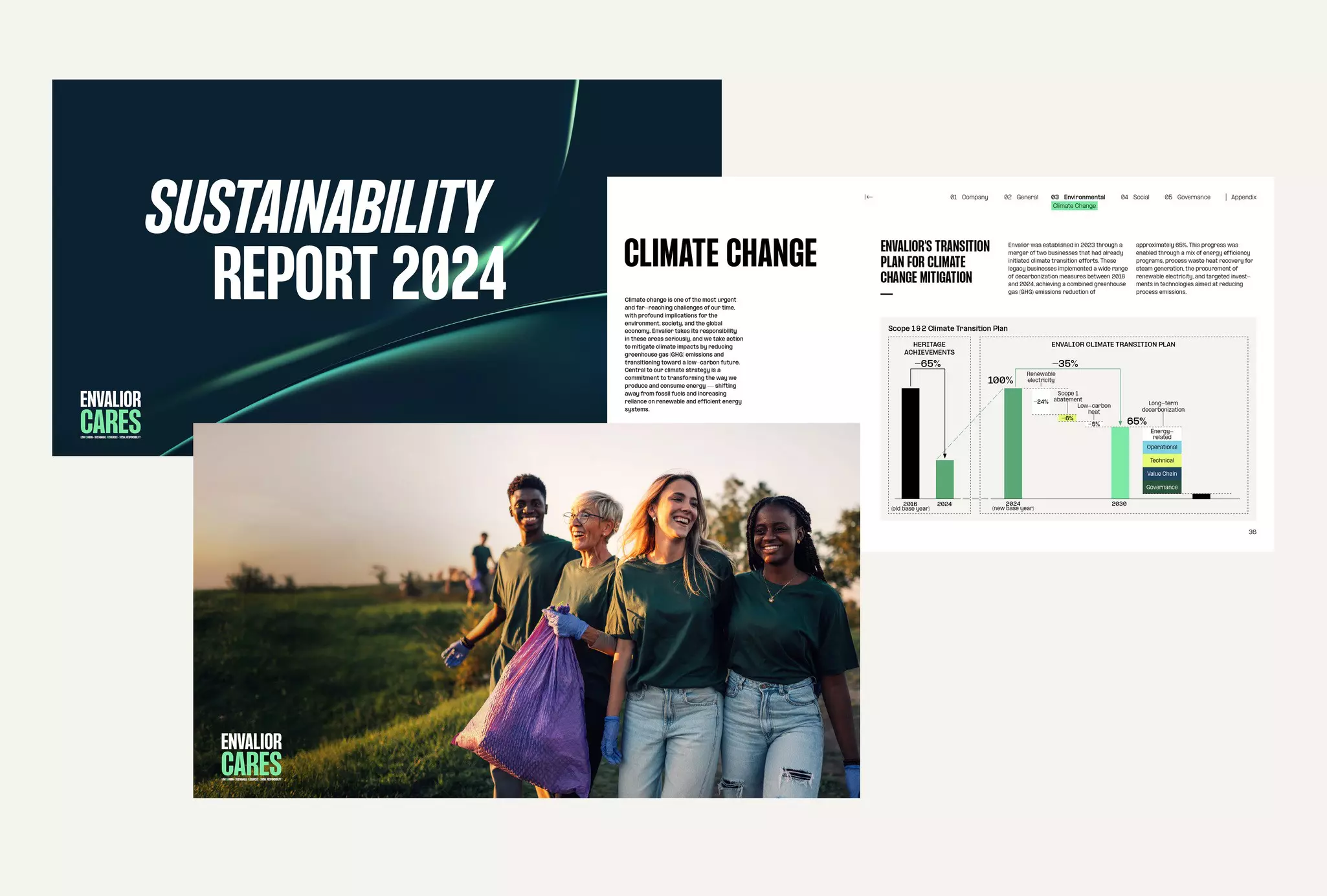
Envalior's first Sustainability Report, covering the period from January to December 2024, was prepared on a voluntary basis and includes a Double Materiality Assessment (DMA). By assessing its first full year of operations through a sustainability lens, the company reinforces its commitment to concrete progress on environmental, social, and governance (ESG) topics, based on a solid foundation of accurate and transparent corporate reporting. In addition, the report represents an important step toward compliance with the European Sustainability Reporting Standards (ESRS).
Our sustainability ambitions are brought together in Envalior CARES – our organization-wide commitment to addressing the environmental and social impacts of our business. Envalior CARES is built on three pillars: Low CArbon, Sustainable REsources, and Social Responsibility. By targeting our activities around these three focus areas, we can drive progress at our sites around the world and contribute to a more sustainable future for people and the planet. We pursue this through our ambitious and pragmatic roadmap, which contains key organizational frameworks and strategic commitments.
Tackling the growing global problem of climate change requires consistent action on carbon reduction, both within our own operations and across the va...
As part of our commitment to sustainable resources, we are actively evaluating and improving the raw materials used in our products—prioritizing respo...
The Social Responsibility pillar is dedicated to ensuring the safety and well-being of our people. Envalior’s operations and processes are regularly r...

The structural components of Ahrend’s Remode sustainable office chair are made of Envalior’s Akulon® RePurposed. The mechanical recyclate from old fishing nets meets the stiffness and strength requirements in Remode’s load-bearing chair parts.

The binding features Envalior’s eco-friendly Durethan® Blue, made from 90% sustainable raw materials, providing high mechanical strength, stiffness and cold temperature durability.