
Replacing brass in potable water systems
By Pim Janssen
Market Development Manager, Envalior
Rising copper demand, tightening lead regulations, and increasing cost pressure are forcing the plumbing industry to reconsider traditional brass components. High-performance engineering plastics now offer a viable alternative—combining potable water compliance, dimensional stability, and efficient manufacturing.
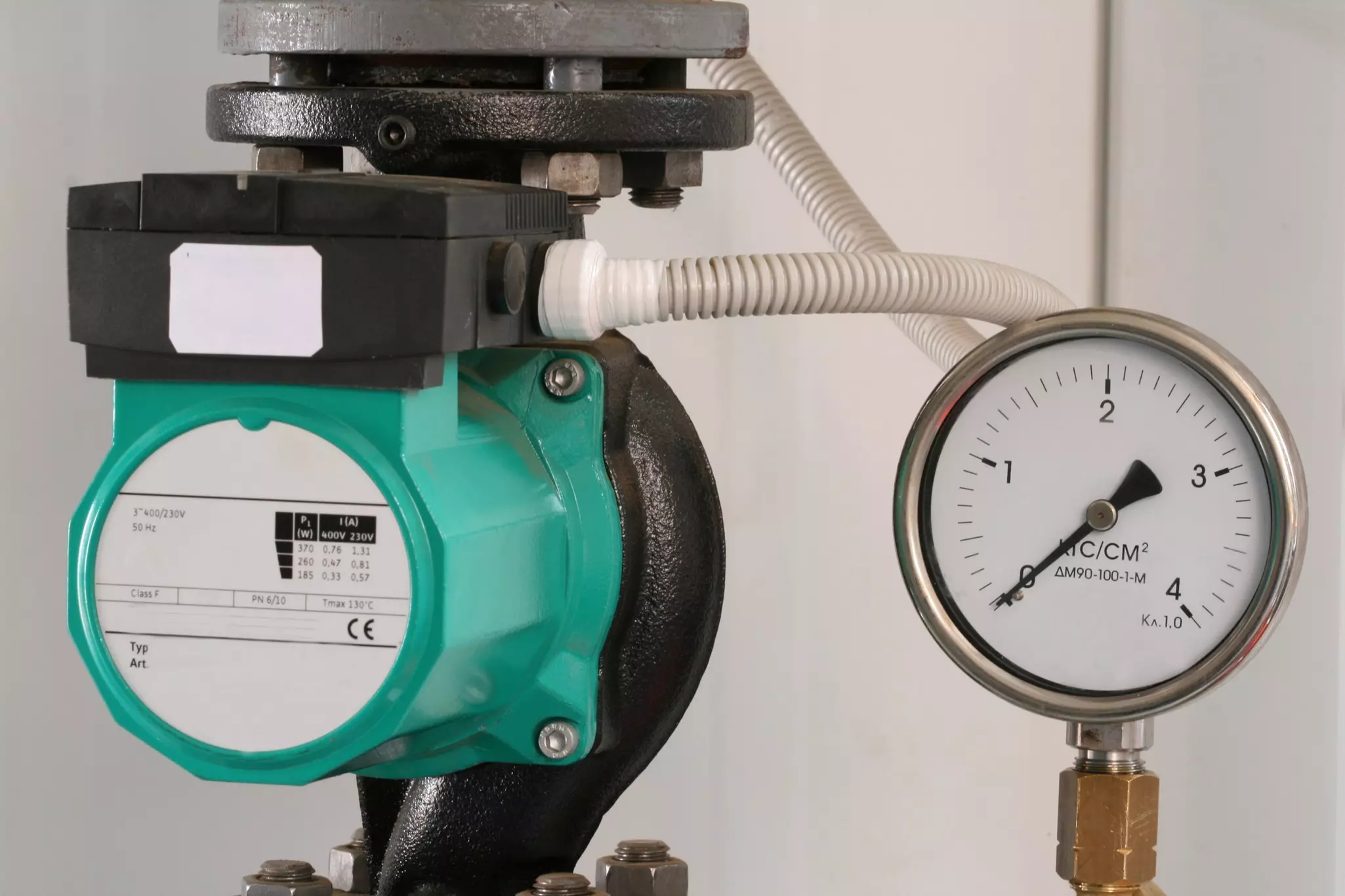
For decades, brass has been the default material for plumbing components in contact with drinking water—from valves and fittings to water meter housings and pump parts. Its durability, corrosion resistance, and machinability, making it a dependable solution for manufacturers.
Today, however, several global trends are reshaping material selection. Regulations governing potable water materials are becoming more stringent, copper demand is driving cost volatility, and manufacturers are under growing pressure to reduce system costs while maintaining reliability.
Together, these pressures are accelerating the shift to high-performance engineering plastics as alternatives to traditional brass components.
Lead regulations are tightening
Increasing regulation of lead in drinking water systems is a primary driver of brass replacement.
Historically, many brass alloys contained small amounts of lead to improve machinability. However, even low levels of lead exposure poses serious health risks according to the Environmental Protection Agency (EPA), including neurological impacts in children and cardiovascular or kidney issues in adults.
Regulations governing potable water materials are tightening worldwide. In Europe, the EU Drinking Water Directive (EU DWD) is introducing harmonized requirements for materials in contact with drinking water, placing greater scrutiny on substances that leach into water systems. Similar certification frameworks, such as National Sanitation Foundation (NSF) in the US and the Water Regulations Approval Scheme (WRAS) in the UK, guide compliance in other regions. Manufacturers face a growing challenge: materials that meet current standards will face stricter requirements in the future. Designing products with low-leaching materials from the outset helps reduce the risk of costly redesigns or recertification delays.
Copper demand is driving cost volatility
Copper is a key component of brass alloys, providing corrosion resistance and durability. But copper is also becoming one of the most strategically important materials in the global economy.
Electrification, renewable energy infrastructure, cloud computing, and the rapid expansion of AI data centers are dramatically increasing global demand for copper. As industries compete for supply, copper prices are increasingly volatile.
For manufacturers producing millions of plumbing components each year, volatility directly affects production costs and supply planning.
Engineering plastics reduce exposure to copper-driven price fluctuations while maintaining strong mechanical performance.
Brass replacements must meet demanding requirements
Replacing brass is not simply a cost decision—it is a performance challenge.
Plumbing components must operate reliably under pressure, temperature fluctuations, and long-term exposure to water while maintaining tight dimensional tolerances to prevent leakage.
- A viable replacement must provide:
- High mechanical strength for pressure and torque loads
- Strong dimensional stability
- Hydrolysis resistance in warm or hot water
- Low moisture absorption
- Compliance with global drinking water certifications
Manufacturers have used traditional polymers such as PA66 or PPO in some plumbing applications, but face limitations. PA66 struggles with global warm water certification, hydrolysis resistance, dimensional stability due to high water pick-up, and conditioning impacting assembly strength. PPO struggles with thin wall mechanics with a direct impact on assembly strength, environmental stress cracking sensitivity that impats part durability, and global warm water contact certification.
Manufacturers are increasingly evaluating engineering plastics designed specifically for potable water systems.
Engineering plastics enable reliable brass replacement
Engineering plastics families like bio-based EcoPaXX®, high-temperature ForTii®, and Xytron® provide the strength, dimensional stability, and hydrolysis resistance required for water system applications.
ExoPaXX® PA410 grades offer low moisture absorption and excellent hydrolysis resistance, improving dimensional stability and long-term reliability in warm water environments. Compared with traditional PA66 materials, they deliver higher conditioned strength, enabling thinner wall sections or improved torque and bending performance without changing part geometry.
For hotter water environments, Xytron® and high-performance ForTii® materials provide strong weld-line performance and resistance to hydrolytic aging, maintaining mechanical properties over long service lifetimes.
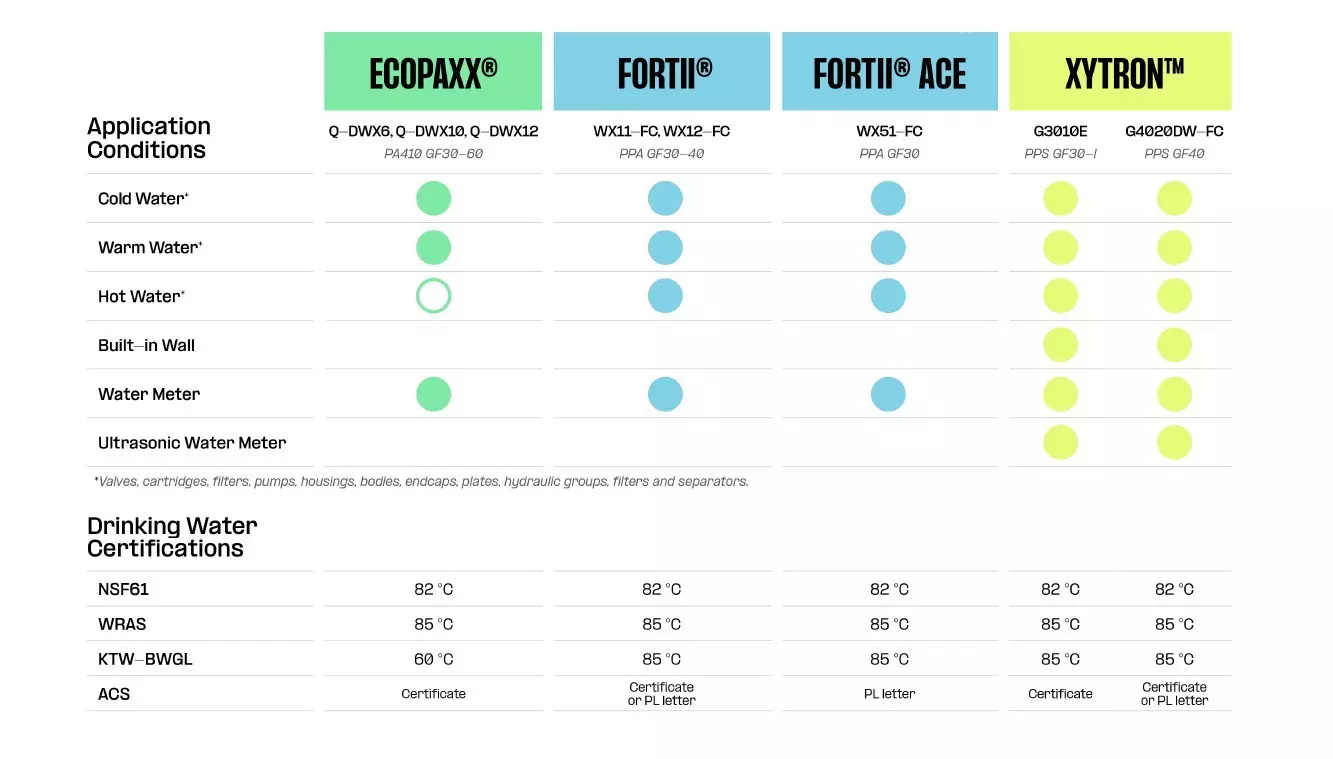
Engineering plastics such as ExoPaXX®, ForTii®, and Xytron® enable reliable brass replacement across a wide range of plumbing components while meeting global drinking water certifications.
Injection molding improves manufacturing efficiency
Material performance alone does not determine suitability. Manufacturing efficiency also drives material selection.
Brass components typically require machining processes involving multiple production steps and material waste. Manufacturers commonly process engineering plastics through injection molding.
Injection molding produces complex geometries in a single step with excellent repeatability and minimal waste, improving scalability for high-volume plumbing components.
Early material evaluation reduces risk
Material transitions in infrastructure industries take time. Qualification, certification, and product redesign cycles extend over several years.
Drinking water regulations continue to evolve, and supply pressures around metals such as copper are unlikely to ease.
Manufacturers that evaluate compliant materials early will be better positioned to meet future regulations while maintaining reliable supply chains.
Replacing metal components often requires design optimization, validation testing, and certification planning, working with a materials partner that supports material selection, part design, simulation, and potable water certification reduces development risk and accelerate product qualification.
Advanced engineering plastics are a strategic material choice for the next generation of drinking water systems.
Explore engineering plastics for potable water applications
Envalior offers a portfolio of engineering plastics designed for drinking water contact applications, including EcoPaXX® PA410, ForTii® PPA, and Xytron™ PPS. These engineering plastics combine low leachables, hydrolysis resistance, and strong mechanical performance that support reliable brass replacement across plumbing systems.
Explore certified grades for potable water systems

After obtaining his Ph.D. in supramolecular and organic chemistry, Pim Janssen began his career at Envalior as a chemist for the engineering plastics Akulon (PA6) and the biobased EcoPaXX (PA410). He also spent a few years in product development and program management for high temperature polyamides ForTii (PPA), Stanyl (PA46), EcoPaXX (PA410) and Xytron (PPS). In 2018, he joined the business management team as market development manager for water and food contact, industrial applications, and to develop a unreinforced PPA portfolio.